
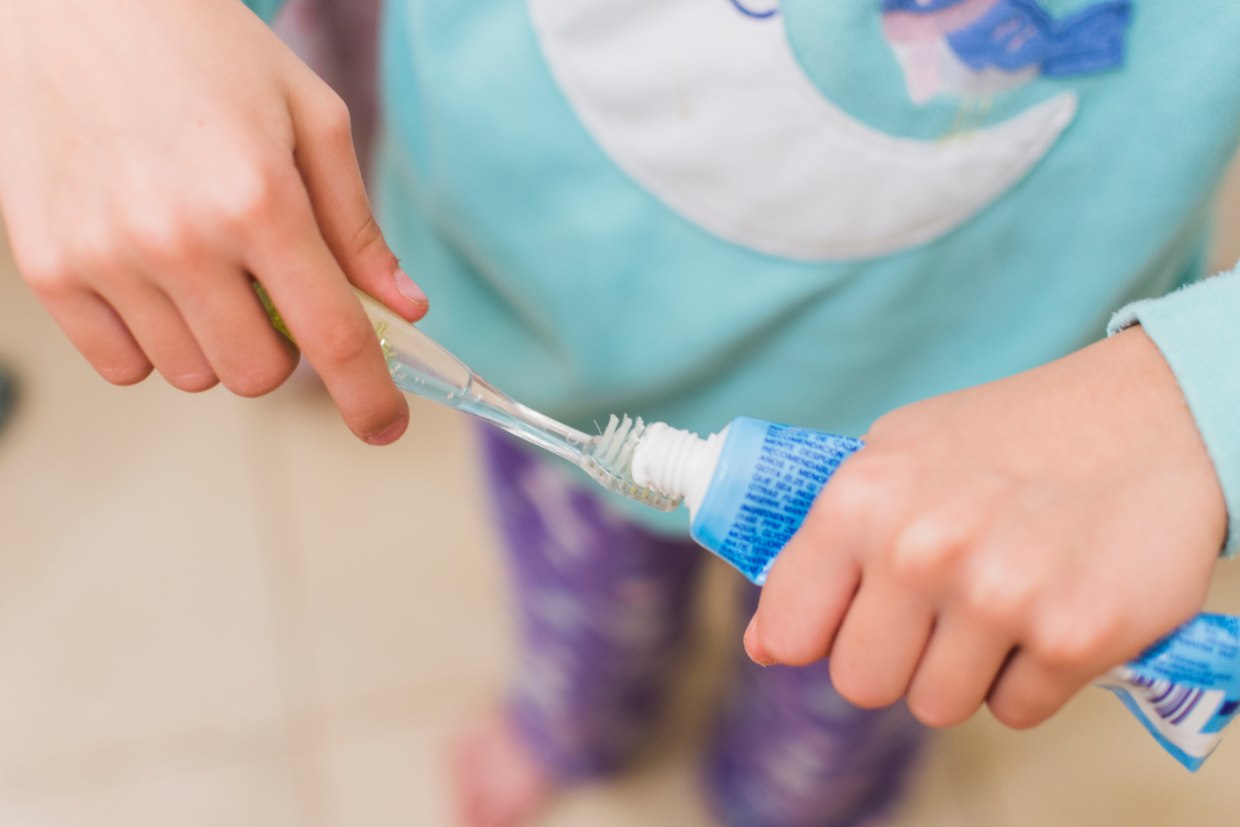
If you’ve ever stood in the toothpaste aisle wondering whether fluoride is really safe for your child, you’re not alone. It’s one of the most common questions families bring to our team at Fairhope Children’s Dentistry. So is fluoride safe for kids? The short answer is yes. Fluoride is safe for children when used in age-appropriate amounts, and it remains one of the most studied tools we have for preventing childhood cavities. Parents across Fairhope, AL ask us this almost every week, and we’re always glad to talk it through.
What Is Fluoride and Why Do Dentists Recommend It?
Fluoride is a naturally occurring mineral that strengthens tooth enamel and helps prevent cavities in children. You’ll find it in water, certain foods, toothpaste, and professional dental treatments. Both the American Dental Association (ADA) and the American Academy of Pediatric Dentistry (AAPD) endorse fluoride as a safe, effective way to protect growing smiles when used as directed.
So why do pediatric dentists recommend it so consistently? Children’s teeth are especially vulnerable to decay. Enamel on baby teeth is thinner than on adult teeth, and little ones are still learning how to brush thoroughly. Fluoride gives that enamel a real boost, making it more resistant to the acids that cause cavities.
Here’s what makes fluoride such a useful tool for families:
- It’s everywhere already. Tap water, many foods, and most toothpastes contain trace amounts, which means children benefit from low-level daily exposure without any extra effort.
- It works two ways. Fluoride can remineralize early decay before it becomes a cavity, and it strengthens enamel against future acid attacks.
- It’s backed by decades of research. According to the ADA, community water fluoridation is considered one of the most significant public health measures of the past century.
- It’s well-suited for children. Professional applications are quick, gentle, and designed with young patients in mind.
When families ask whether fluoride is necessary, our answer is that it’s one of the simplest ways to protect a child’s smile during the years when prevention matters most. Our pediatric team at Fairhope Children’s Dentistry is always happy to explain the science in plain language.
How Fluoride Works to Protect Children’s Teeth
Bonding with tooth enamel, fluoride makes it more resistant to the acid produced by cavity-causing bacteria. It also helps reverse early-stage decay through a process called remineralization, where minerals are redeposited into weakened enamel. This dual action is why fluoride is considered so effective for children, whose teeth are still developing.
There are two main ways fluoride reaches your child’s teeth:
- Topical fluoride: Applied directly to the teeth through toothpaste, mouth rinses, or professional treatments at the practice. This is the most direct way to strengthen enamel on the outside.
- Systemic fluoride: Ingested through fluoridated water or certain supplements. This type supports developing teeth from the inside before they erupt.
Professional fluoride treatments deliver a higher concentration than what’s in over-the-counter toothpaste, which is why we apply them during routine visits. The application is quick, usually painted on as a varnish or gel, and most children barely notice it. Within a few hours, that fluoride has bonded with the enamel and started its protective work.
Why is childhood the ideal time for fluoride? Teeth are most receptive to mineral uptake while they’re still forming and during the years immediately after they erupt. The enamel is essentially “set” during this window, making early fluoride exposure a long-term investment in your child’s oral health.
In our practice, we tailor fluoride recommendations to each child’s age, cavity risk, and existing exposure from water and home care. Not every child needs the same approach, and that’s something our team evaluates at every visit.
Benefits of Fluoride for Kids
Fluoride benefits children beyond cavity prevention by building habits, protecting both sets of teeth, and reducing the need for restorative care later. For growing children, the value adds up across years, not just a single visit.
How does fluoride protect both baby and permanent teeth?
Here’s what families gain when fluoride is part of their child’s preventive routine:
- Fewer cavities. Research from the CDC suggests fluoride significantly reduces tooth decay in children, with community water fluoridation alone preventing a meaningful portion of cavities over a lifetime.
- Stronger baby AND permanent teeth. Baby teeth guide permanent teeth into proper position, so protecting them matters. Fluoride helps both sets stay healthier longer.
- Lower long-term costs. Preventing a cavity is far less expensive, and far easier on your child, than restoring one. A few minutes of fluoride at a routine visit can save hours of treatment later.
Is professional fluoride application comfortable for young children?
The experience is built around comfort, which makes a real difference for first-timers and nervous little ones alike:
- A simple, easy visit. Professional fluoride application is quick and takes just minutes. Most children find it easy and even enjoy the flavored varnish options.
- Healthy habits that stick. When children grow up associating fluoride with positive dental visits, they’re more likely to continue good oral care into adolescence and adulthood.
Prevention driven visits that build healthy habits are at the heart of what we do, and fluoride is one of the most reliable tools we have to support that goal. Every smile we help protect today is one less restoration a family may need to think about tomorrow.
Fluoride vs. Fluoride-Free and Alternative Options
With so many toothpaste choices on store shelves, it’s reasonable to wonder how fluoride compares to fluoride-free or alternative cavity-prevention options. Here’s how the most common choices stack up:
| Option | How It Works | Best For | Limitations |
|---|---|---|---|
| Fluoride toothpaste | Strengthens enamel, remineralizes early decay | Daily home use for most children | Requires age-appropriate amount |
| Fluoride-free toothpaste | Cleans surface plaque, often uses hydroxyapatite or xylitol | Families avoiding fluoride for personal reasons | Less proven cavity protection |
| Silver Diamine Fluoride (SDF) | Stops active decay, applied in-office | Children with cavities who may not tolerate traditional restorations | Darkens decayed area |
| Dental sealants | Physical barrier on chewing surfaces of molars | Cavity-prone back teeth | Doesn’t protect between teeth or front teeth |
| Professional fluoride treatment | High-concentration topical application | All children at routine visits | Should be combined with home care |
Fluoride-free options can clean teeth and freshen breath, but most lack the enamel-strengthening evidence that fluoride has built over decades. Hydroxyapatite, a newer ingredient in some fluoride-free toothpastes, shows promise but doesn’t yet have the same depth of research behind it.
Silver Diamine Fluoride is worth a look because it offers a gentle alternative for young children with early decay who aren’t ready for traditional restorations. It’s painted on, stops the cavity from progressing, and gives the tooth time until your child is older or the tooth naturally falls out.
Sealants and fluoride aren’t either-or choices. They work together. Sealants protect the deep grooves of molars where food gets trapped, while fluoride strengthens the entire tooth surface. For most children, the strongest prevention strategy combines fluoride, sealants, balanced nutrition, and consistent home brushing.
If you have questions about which approach fits your family, our team is happy to walk through the options at your child’s next visit.
How Much Do Fluoride Treatments Cost?
Professional fluoride treatments are among the most affordable preventive services in pediatric dentistry. They’re typically a small portion of a routine visit and are often fully covered by dental insurance for children, since most plans recognize the long-term savings of cavity prevention.
Several factors can influence cost:
- Type of treatment. Fluoride varnish is the most common and is usually included in preventive visits. Higher-concentration treatments or prescription-strength options may have different pricing.
- Frequency. Most children receive fluoride twice a year at routine visits. Children at higher cavity risk may benefit from more frequent applications.
- Insurance coverage. Many dental plans cover fluoride for children under a certain age, often through age 14 or 18, depending on the policy.
- Additional preventive care. Combined with sealants, exams, and cleanings, fluoride is part of a broader prevention package that offers strong value.
Compare that to the cost of restoring a cavity. A single composite restoration costs significantly more than a fluoride treatment, and more complex care like a crown or extraction costs even more. Prevention isn’t just better for your child’s comfort, it’s better for your family’s budget. Families here in Fairhope, AL often tell us that the math is reassuring once they see it laid out. Many municipal water supplies already contain optimized fluoride levels, and standard children’s toothpaste delivers it twice a day at home, so a small investment in professional fluoride at Fairhope Children’s Dentistry pays back many times over.
Is Fluoride Right for Your Child? Candidacy & Safety
Most children benefit from age-appropriate fluoride, but the right amount and form depend on your child’s age, cavity risk, and overall exposure. Our team at Fairhope Children’s Dentistry evaluates these factors at every visit to make sure each child gets what’s right for them.
Children who often benefit most from professional fluoride include those who:
- Snack frequently or drink juice and sweetened beverages regularly
- Are still developing strong brushing and flossing habits
- Live in areas with low or no fluoridated water
- Have a history of cavities or early signs of enamel weakness
- Wear orthodontic appliances that make cleaning more difficult
Knowing fluoride is safe for kids comes down to using the right amount for your child’s age. Here are the general guidelines we share with families across Fairhope, AL:
- Under age 3: A smear of fluoride toothpaste about the size of a grain of rice, twice daily.
- Ages 3 to 6: A pea-sized amount of fluoride toothpaste, twice daily, with a parent supervising to minimize swallowing.
- Ages 6 and up: A pea-sized amount, with children spitting out excess after brushing.
When used in these amounts, fluoride is safe. The concern parents sometimes hear about, dental fluorosis, is typically mild and cosmetic, usually appearing as faint white spots on the teeth. It happens when young children swallow too much toothpaste over time, which is why we recommend supervised brushing during the early years.
Have concerns about your child’s fluoride exposure, whether from well water, supplements, or a sensitivity? Please share them with our team. We’re happy to review your situation and make adjustments that fit your family’s comfort level. Honest conversation is part of how we build trust with parents.
Frequently Asked Questions About Fluoride for Kids
Can fluoride be harmful to children?
Fluoride is safe for children when used in the amounts recommended by pediatric dentists and major health organizations. Concerns usually involve very large doses well beyond what’s in toothpaste or treated water. The most common issue from over-exposure is mild dental fluorosis, which is cosmetic and preventable with supervised brushing during early childhood.
How much fluoride toothpaste should a toddler use?
For children under age 3, use a smear of fluoride toothpaste roughly the size of a grain of rice. From ages 3 to 6, increase to a pea-sized amount. Always supervise brushing at this age to help your child learn to spit out excess toothpaste rather than swallow it.
At what age can kids start fluoride treatments?
Professional fluoride treatments can begin as soon as your child has teeth, usually around their first birthday when they have their first dental visit. The application is gentle, quick, and well-tolerated by even our youngest patients. Our team adjusts the type and frequency based on your child’s age and cavity risk.
What is dental fluorosis and is it dangerous?
Dental fluorosis is a cosmetic change in the appearance of enamel, usually showing as small white spots or streaks. It’s caused by swallowing too much fluoride while teeth are developing, typically before age 8. Mild fluorosis is not harmful to tooth function or health, and following age-appropriate toothpaste guidelines makes it easy to prevent.
Are fluoride treatments necessary if we drink fluoridated water?
Yes, in most cases. Fluoridated water provides helpful systemic exposure, but professional treatments deliver a much higher topical concentration directly to the tooth surface. The two work together. Children at higher cavity risk especially benefit from professional applications, even when their drinking water contains fluoride.
Where can families in Fairhope learn what’s right for their child?
Fluoride is one of the simplest, most studied tools we have to help children grow up cavity-free. When used in age-appropriate amounts, it’s safe, gentle, and remarkably effective. Every child is different, though, and the best way to know what’s right for yours is to talk with a pediatric dentist who knows them.
At Fairhope Children’s Dentistry, our doctors focus exclusively on children’s dental care. That means every recommendation we make, including fluoride, is shaped by training and experience in pediatric dentistry. We’re glad to answer your questions, review your child’s risk factors, and help you feel confident in the choices you’re making at home in Fairhope, AL. Happy visits. Healthy smiles. That’s what we’re here for.