
Start brushing as soon as the first tooth appears, using a rice-grain smear of fluoride toothpaste, and switch to a pea-sized amount around age 3. Start flossing once two teeth touch. Most children need a parent’s help with both until about age 7 or 8.
That is the short version. The longer version is that the technique, the toothpaste amount and how much help your child needs all change every couple of years. Brushing a gummy six-month-old is nothing like coaching a nine-year-old who insists they already did it. Below is a stage-by-stage guide our team in Fairhope uses when we demonstrate brushing and flossing during hygiene visits, plus the most common mistakes we see and how to get a reluctant child on board.
When Should You Start Brushing Your Child’s Teeth?
Before there are any teeth at all. Wiping your baby’s gums with a soft, damp cloth after feedings removes milk residue and gets your baby used to having a hand in their mouth. Once the first tooth breaks through, usually somewhere in the second half of the first year, switch to a soft infant toothbrush.
Why baby teeth deserve the effort
Baby teeth hold space for the permanent teeth, help your child chew and speak clearly, and can get cavities within months of coming in. Decay in a baby tooth can spread, cause pain and infection, and sometimes leads to a crown or an extraction. Daily brushing from the very first tooth is the simplest way to avoid all of that.
How much toothpaste to use at each age
Under age 3, use a smear of fluoride toothpaste about the size of a grain of rice. From age 3, use a pea-sized amount. Spitting is a learned skill, so the small amounts matter for younger children who still swallow most of it. If you have questions about fluoride itself, our post on whether fluoride is safe for kids covers the research and the reasoning.
How Do You Brush a Child’s Teeth at Each Age?
The goal at every stage is the same: clean every surface of every tooth, twice a day, for about two minutes. What changes is who holds the brush and how you position your child.
Babies and toddlers (first tooth to age 3)
Lay your child in your lap with their head toward you, or sit behind them in front of a mirror. This gives you a clear view and steadies their head. Lift the lip gently to reach the front teeth near the gumline, which is where early decay in toddlers often starts. Use small circles and do not worry about perfection. A quick, consistent routine beats a long battle.
Preschoolers (ages 3 to 5)
Let your child have a turn first, then you finish. Preschoolers love independence, and “you go, then I check” keeps the peace while making sure the back molars actually get cleaned. Angle the bristles toward the gumline and brush the chewing surfaces, the cheek side and the tongue side of each tooth.
School-age children (ages 6 to 8)
This is when the first permanent molars arrive behind the baby teeth, and they are easy to miss. Your child is doing more of the work now, but a quick parent check at night is still worth it. A simple test: if your child cannot yet tie their shoes neatly, they probably cannot brush thoroughly on their own either.
Older kids and preteens (ages 9 and up)
Most children can brush on their own by now. Your job shifts to reminders, spot checks and replacing the toothbrush every three months or when the bristles splay. Children in braces or with crowded teeth need extra time around brackets and between teeth.
| Age | Toothpaste amount | Who brushes | Flossing |
|---|---|---|---|
| Before teeth | None, wipe gums with a damp cloth | Parent | Not needed |
| First tooth to age 3 | Rice-grain smear of fluoride toothpaste | Parent | Once two teeth touch, parent flosses |
| Ages 3 to 5 | Pea-sized amount | Child tries, parent finishes | Parent flosses daily |
| Ages 6 to 8 | Pea-sized amount | Child brushes, parent checks at night | Floss picks with parent help |
| Ages 9 and up | Pea-sized amount | Child, with spot checks | Child flosses, parent reminds |
When Should Kids Start Flossing?
As soon as two teeth touch each other. Once there is contact, a toothbrush cannot reach the surfaces between those teeth, and that is exactly where many cavities in young children begin. For a lot of kids the back baby molars are the first teeth to touch, often around age 2 or 3, but every child is different.
How to floss a young child’s teeth
Have your child lie back in your lap or on a bed so you can see. Use a short piece of floss wrapped around your fingers, or a child-sized floss pick, and slide it gently between the teeth. Curve it into a C-shape against one tooth, move it up and down, then do the same against the neighboring tooth. Go slowly near the gums. A little bleeding at the start is common and usually stops within a week or two of daily flossing.
Floss picks, string floss or a water flosser?
Floss picks are the easiest for parents and for kids learning to do it themselves. String floss gives a better wrap around each tooth once your child has the dexterity for it. A water flosser can help children with braces, but it does not replace floss for most kids. The right tool is the one your child will use every day.
What Are the Most Common Brushing Mistakes Parents Make?
Most of the plaque we find at cleanings is in the same few places. These habits account for most of it:
- Skipping the back molars. They are hard to see and easy to rush. Start there instead of finishing there.
- Missing the gumline. Plaque collects where the tooth meets the gum. Tilt the bristles toward it.
- Handing over the brush too early. Independence is good, but supervision should last into the early school years.
- Rinsing right after brushing. Encourage your child to spit, not rinse, so a thin layer of fluoride stays on the teeth.
- Brushing before the bedtime snack or milk. Night brushing should be the last thing that touches the teeth before sleep.
How Can You Get a Child Who Hates Brushing to Cooperate?
Resistance is normal, especially between ages 1 and 4. A few approaches tend to work:
- Let your child choose their toothbrush and a kid-friendly fluoride toothpaste.
- Use a two-minute song or timer so the routine has a clear end.
- Brush at the same times every day so it becomes automatic, not a negotiation.
- Take turns: your child brushes a stuffed animal or your teeth, then you brush theirs.
- Praise effort and keep it calm. A short, steady routine beats a tearful perfect one.
Children with sensory sensitivities sometimes do better with an extra-soft brush, an unflavored or mild toothpaste, or brushing in a quieter spot. Tell us what you have tried at your child’s visit and we can suggest options that fit.
How Do Professional Cleanings Fit In?
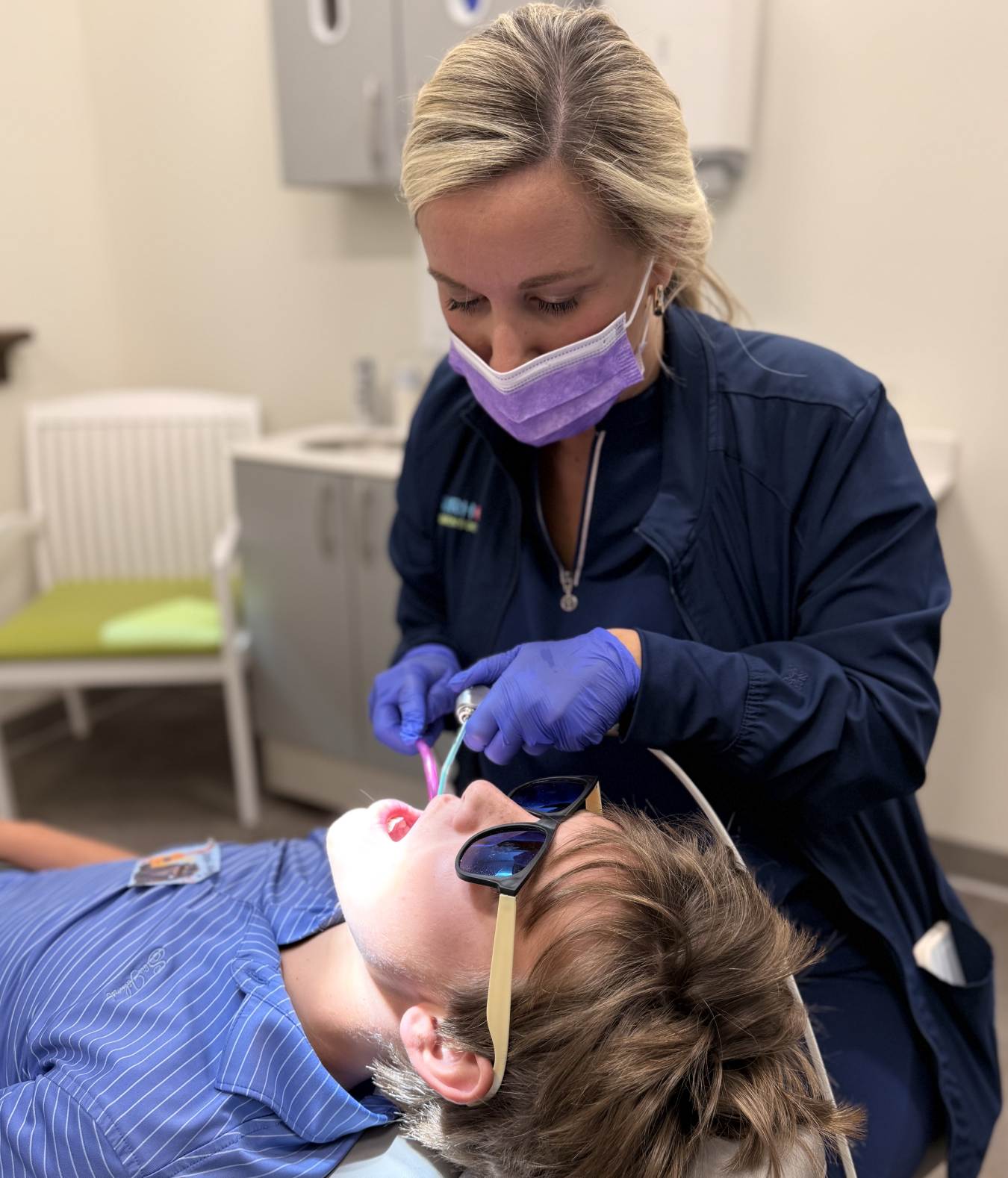
Even with great home care, plaque can harden into tartar that a toothbrush cannot remove. Regular dental cleanings for kids remove that buildup, and they give our hygienists a chance to show you and your child where brushing is falling short. We typically see children every six months, which lines up with routine dental exams and, for many kids, a fluoride treatment. Our preventive care page explains how brushing demonstrations, nutrition guidance, sealants and fluoride work together.
If you are worried your toddler already has early decay, our guide on preventing cavities in toddlers covers the early warning signs, and our sealants page explains how the deep grooves in back teeth get extra protection.
Frequently Asked Questions
Should my child use an electric toothbrush?
An electric toothbrush can make thorough brushing easier for some kids, and many children find it more fun. A manual brush works just as well when it is used correctly. Choose a soft, child-sized head either way.
How long should my child brush?
About two minutes, twice a day, with one of those sessions right before bed. Most children badly overestimate how long they have been brushing, so a timer or song helps.
Is it okay if my toddler swallows toothpaste?
That is why the amount is so small for young children. A rice-grain smear is safe if swallowed. Keep the tube out of reach so the amount stays under your control.
My child’s gums bleed when we floss. Should we stop?
No. Mild bleeding usually means the gums are irritated by plaque and will settle with gentle daily flossing. If bleeding continues after two weeks, or the gums look swollen, mention it at your child’s next visit.
Request an Appointment in Fairhope
If you would like a hands-on brushing and flossing demonstration for your child, our hygienists are happy to help. Request an appointment online or call Fairhope Children’s Dentistry at (251) 255-2050.