
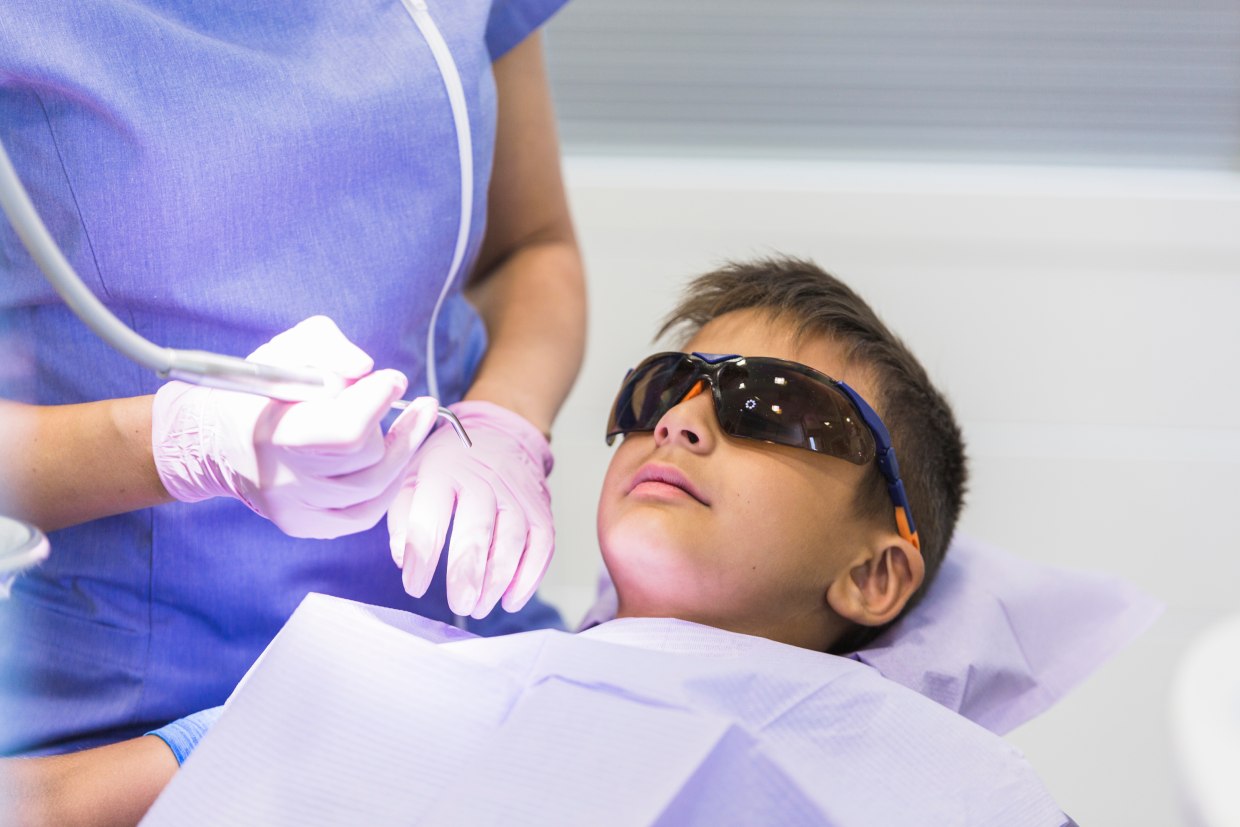
Yes, dental sealants are worth it for children in most cases. Sealants are thin protective coatings applied to the chewing surfaces of back teeth to shield them from decay. For children prone to cavities, they add a gentle, affordable layer of protection during the years when back teeth are most vulnerable. Families in Fairhope, AL often ask us about them, and our answer is usually a confident yes.
What Are Dental Sealants?
Dental sealants are thin protective coatings painted onto the chewing surfaces of back teeth, where deep grooves and pits tend to trap food and bacteria. The sealant flows into these tiny crevices and hardens into a smooth barrier that keeps decay-causing bacteria out. It’s one of the simplest preventive tools in pediatric dental care.
Most sealants are made from a BPA-free plastic resin that bonds directly to the enamel. Once cured, the material creates a durable shield over areas a toothbrush often can’t reach well. Sealants are most commonly placed on permanent molars and premolars, since those teeth have the deepest grooves and tend to be where childhood cavities first develop.
The application itself is quick, gentle, and non-invasive. There’s no drilling, no anesthesia, and no discomfort, which makes sealants a good option for younger children who may feel nervous about dental care. At Fairhope Children’s Dentistry, our team often recommends sealants as part of a prevention plan that grows with your child.
How Dental Sealants Are Applied
Applying a sealant is a quick, painless process. We clean and dry the tooth, brush on a mild etching gel, rinse and dry it again, then paint the liquid sealant into the grooves. A safe blue light hardens it in seconds. The whole thing usually takes just a few minutes per tooth, with no drilling and no recovery time.
Here’s what to expect during a typical sealant visit:
- Cleaning the tooth. We thoroughly clean the chewing surface to remove plaque and any food particles.
- Drying the area. A small cotton roll keeps the tooth dry while we work.
- Applying an etching gel. A mild solution is brushed onto the tooth to help the sealant bond properly. It sits for just a few seconds.
- Rinsing and drying again. The gel is rinsed off, and the tooth is dried a second time.
- Painting on the sealant. The liquid sealant is gently applied into the grooves of the tooth.
- Curing with a special light. A safe blue light hardens the sealant in seconds, creating a smooth, protective shield.
The sealant fills the deep pits and fissures where bristles can’t always reach, giving your child an extra layer of defense in the spots most likely to decay. The process is reversible, safe for young children, and comfortable from start to finish. Many children tell us it feels like having their teeth polished. Your child can head straight back to school or play afterward.
Are Dental Sealants Worth It for Children? Weighing the Benefits
Sealants offer real, measurable protection during the cavity-prone years of childhood. They’re one of the most cost-effective preventive treatments available, and they work especially well alongside regular brushing, flossing, and routine visits. Our pediatric-focused team in Fairhope, AL sees the difference protected molars make year after year.
Key benefits include:
- Strong cavity protection. According to the Centers for Disease Control and Prevention, sealants can reduce the risk of decay in molars by about 80% in the first two years after application and continue to offer protection for years after.
- Coverage where it matters most. Back teeth do the heavy lifting during chewing, and their grooves are difficult to clean. Sealants protect the exact surfaces where most childhood cavities start.
- A gentle, anxiety-friendly experience. There’s no drilling, no shots, and no discomfort, so even nervous children tend to handle the appointment well.
- Lower long-term costs. Preventing a cavity is far less expensive than treating one. Sealants help families avoid the need for fillings, crowns, or more involved care later on.
- Fewer dental visits down the road. Protected teeth are less likely to develop decay, which means fewer restorative appointments and a smoother experience overall.
For many families, sealants are a small step that delivers years of protection. They support healthy habits at home and give your child’s smile a stronger start. Our doctors devote their practice exclusively to pediatric dentistry, so every sealant recommendation reflects focused experience caring for growing children.
Pros and Cons of Dental Sealants
To help you weigh the decision, here’s a straightforward look at the upsides and the few drawbacks worth knowing. Most families find the benefits clearly outweigh the limitations, but it’s good to see the full picture.
Pros
- Strong, lasting protection for the deep grooves of back teeth
- A gentle application with no drilling, shots, or discomfort
- Lower lifetime dental costs by helping prevent cavities
- Quick visits that fit easily into a busy family schedule
- Often covered by pediatric insurance as a preventive service
Cons
- Sealants protect only the chewing surfaces, not the entire tooth, so daily brushing and flossing still matter
- They can chip or wear over time and may need a touch-up
- They work best on healthy, cavity-free teeth, so timing matters
- A small out-of-pocket cost may apply depending on your coverage
Looking at both sides, sealants remain one of the simplest ways to give your child added protection during the years it counts most.
Sealants vs. Fluoride: What’s the Difference?
Both sealants and fluoride protect teeth from decay, but they work in very different ways. Sealants act as a physical barrier on chewing surfaces, while fluoride strengthens enamel across all surfaces of the tooth. Used together, they offer balanced protection during your child’s most cavity-prone years.
Here’s a quick comparison:
| Feature | Dental Sealants | Fluoride Treatment |
|---|---|---|
| How it works | Physically blocks bacteria from entering grooves | Strengthens and remineralizes enamel |
| Where it’s applied | Chewing surfaces of back teeth | All surfaces of all teeth |
| Application | Painted on and hardened with light | Applied as a varnish, gel, or rinse |
| How long it lasts | Several years per application | A few months between treatments |
| Best for | Deep grooves and pits in molars | Overall enamel strength |
| Type of care | Preventive | Preventive |
Neither treatment is meant to repair existing cavities. They’re both preventive tools, designed to stop decay before it starts. Most pediatric care plans include fluoride at routine visits and sealants when the first permanent molars come in, giving children layered protection that supports growing smiles.
How Much Do Dental Sealants Cost?
Dental sealants typically cost between $30 and $60 per tooth, though the exact price depends on your insurance, your location, and the number of teeth being treated. Many dental insurance plans cover sealants for children as a preventive service, sometimes at little to no out-of-pocket cost. It’s a small investment compared to the cost of treating a cavity later.
A few factors that can affect the final cost include:
- Number of teeth treated. Most children receive sealants on four to eight back teeth.
- Insurance coverage. Pediatric preventive benefits often include sealants up to a certain age.
- Regional pricing. Costs vary slightly between practices and areas.
When you compare the cost of sealants to the cost of a filling, crown, or more involved restorative care, the value adds up quickly. A single sealant lasts several years and helps your child avoid more extensive care down the road. Our team at Fairhope Children’s Dentistry is always happy to walk you through your options and help your family plan ahead with confidence.
Is Your Child a Good Candidate for Sealants?
Most children are good candidates for dental sealants, especially during the years when permanent molars first come in. Sealants work best on teeth that are healthy, cavity-free, and have deep grooves where decay tends to start. A pediatric dentist can determine the right timing during a routine visit.
Sealants are typically recommended for children who:
- Have new permanent molars. The first set usually erupts around age 6, and the second set around age 12. These are the ideal moments to seal.
- Are prone to cavities. Children with a history of decay or higher cavity risk benefit most.
- Have deep grooves in their teeth. Some molars naturally have pits and fissures that trap food no matter how well a child brushes.
- Need extra support on baby teeth. In high-risk cases, sealants can also be placed on primary molars to protect them until they fall out naturally.
The tooth must be free of decay before the sealant is applied, which is why a thorough exam is always the first step. During your child’s visit, our team will check each molar and recommend sealants only where they’ll genuinely help. Drs. Elizabeth Clay, Katherine Rodriguez-Feo, and Kelly Jones bring years of focused pediatric experience to every assessment, and families across Fairhope, AL trust their careful, child-first approach.
Frequently Asked Questions About Dental Sealants
How long do dental sealants last?
Dental sealants typically last between 5 and 10 years with proper care, though some can last even longer. Our team checks sealants at every routine visit to make sure they’re still intact. If a sealant chips or wears down, it can be easily touched up or reapplied.
Are dental sealants safe for children?
Yes, dental sealants are considered safe and have been used in pediatric dental care for decades. Most modern sealants are BPA-free, and the amount of material used is very small. Major organizations like the American Dental Association and the American Academy of Pediatric Dentistry support their use for cavity prevention in children.
Do sealants hurt when applied?
No, the application process is completely painless. There’s no drilling, no anesthesia, and no discomfort during or after the visit. Most children describe it as feeling similar to having their teeth brushed or polished, which makes it a good option for children who feel nervous about dental care.
Can you eat normally after getting sealants?
Yes, your child can eat and drink normally right after the visit. The sealant hardens completely during the curing step, so there’s no waiting period. We may suggest avoiding very sticky or hard foods occasionally to help sealants last as long as possible, but day-to-day eating is no different.
Do sealants replace brushing and flossing?
No, sealants are an added layer of protection, not a substitute for daily care. Brushing twice a day, flossing, and routine dental visits are still essential. Sealants protect the grooves of back teeth, but the rest of each tooth still needs regular cleaning at home.
Can sealants be reapplied if they wear off?
Yes, sealants can be reapplied easily if they wear down or chip. We monitor them at every visit and let you know if a touch-up is needed. Reapplication is just as quick and gentle as the original placement.
Still weighing whether sealants make sense for your child? Stop by and let’s talk it through. Our team at Fairhope Children’s Dentistry will take a close look at your child’s teeth, walk you through the options, and put together a prevention plan that fits your family and your day-to-day life in Fairhope, AL. Schedule a visit to learn more about how sealants can support your child’s growing smile.