What Is an Orthodontic Evaluation for Children?
An orthodontic evaluation for children is a clinical assessment of jaw growth, tooth alignment, and bite development. It helps identify whether your child’s teeth and jaws are developing on track, and whether any early concerns need attention. The American Association of Orthodontists recommends this first evaluation happen by age 7.
That timing surprises most parents. Your child still has a mix of baby and permanent teeth at that age, so braces feel like a distant concern. But there’s good reason for the recommendation. By age 7, enough permanent teeth have come in to reveal developing patterns, and your child’s jaw is still growing enough that intervention can make a real difference if needed.
Here’s the key point: early evaluation doesn’t automatically mean early treatment. It establishes a baseline so your child’s dental team can monitor development over time. Both pediatric dentists and orthodontists play complementary roles in this process. Pediatric dentists watch for changes at each visit, and when they spot something that needs specialized attention, they coordinate care with trusted orthodontic colleagues. Parents often tell us they’re glad we caught something early, even when the recommendation was simply to keep watching.
Parents often ask when a child should be evaluated by an orthodontist or dentist for braces, and the answer is almost always earlier than they expect. Starting the conversation at age 7 gives your child’s team the longest possible window to observe and respond.
What Happens During a Child’s Orthodontic Evaluation?
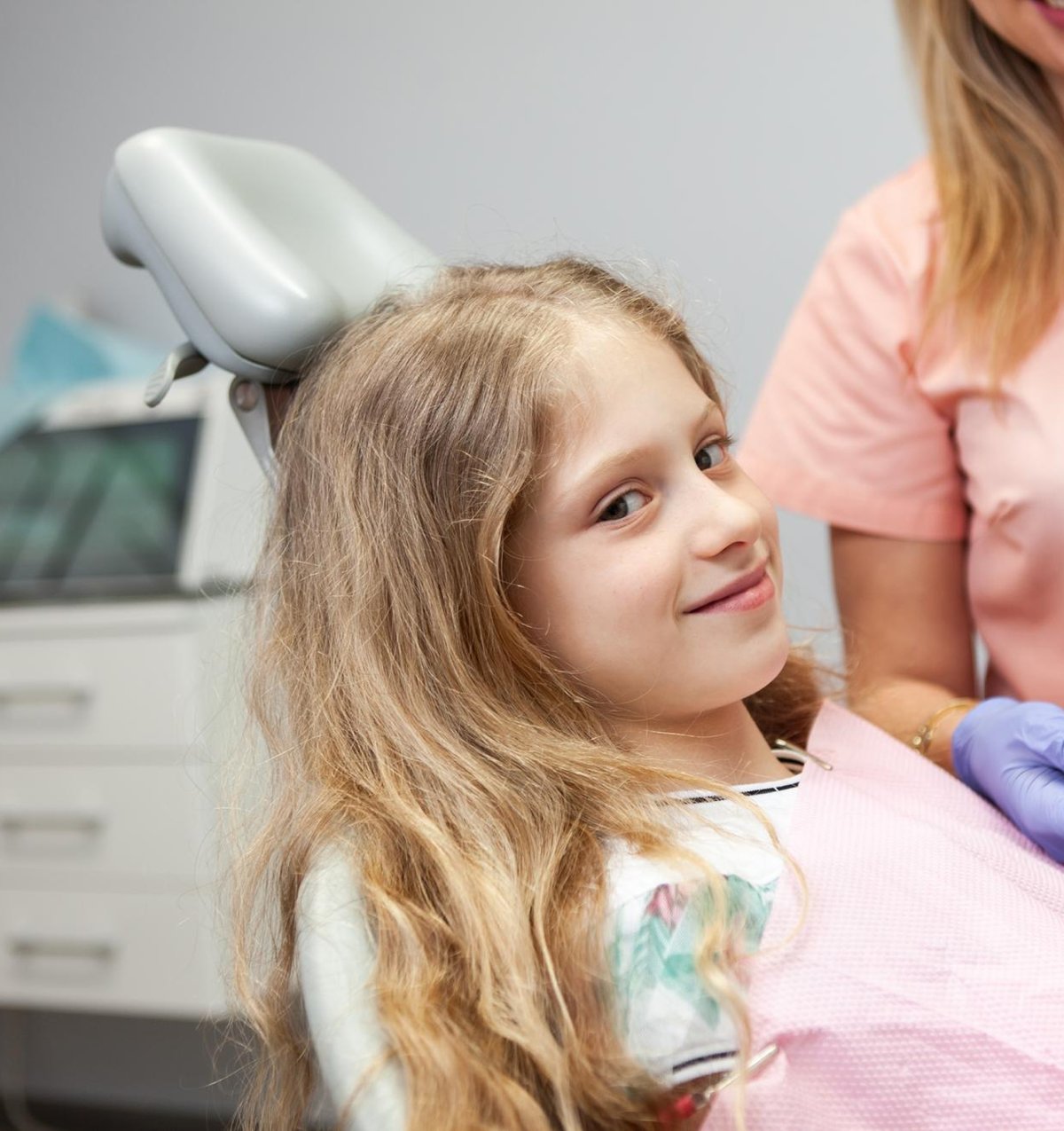
The evaluation itself is straightforward and comfortable for most children. Your child’s provider will perform a visual and digital examination of the teeth, jaw, and bite alignment. They’ll look at how the upper and lower teeth come together and check for any irregularities in jaw position.
Your child’s provider may also take X-rays or panoramic images. These reveal teeth that haven’t erupted yet and show how the jaw bones are developing beneath the surface. That information helps predict what changes are likely as your child grows.
Oral habits matter here, too. Thumb-sucking, mouth breathing, and tongue thrust all influence how teeth and jaws develop. Catching these habits early gives you a chance to address them before they create lasting changes.
After the examination, you’ll receive one of three recommendations:
- Monitor: Everything looks on track, and we’ll keep watching at regular visits
- Intervene now: Early action could prevent a bigger issue
- Wait for Phase I or Phase II: Treatment will be more effective at a later stage
Many of these concerns come to light during routine dental exams. When something warrants closer attention, your child’s team will discuss next steps and help coordinate any needed referrals.
Benefits of Early Orthodontic Evaluation
Early orthodontic evaluation gives your child real advantages for long-term oral health. Here’s a closer look at why timing matters.
How Does Early Detection Prevent Bigger Problems?
Crossbites, crowding, and jaw discrepancies are easier to address when identified early. A crossbite caught at age 8, for example, might need a simple expander. That same crossbite at age 14 could require a more involved, multi-step correction. The difference in scope, and in what your child goes through, is worth paying attention to.
Can Orthodontic Appliances Guide Jaw Growth?
Children’s bones are still developing, which means we can influence how they grow. Certain appliances work with natural growth patterns to guide the jaw into better alignment. This window closes as children approach adolescence, so timing matters.
Does Early Correction Reduce Injury Risk?
Protruding front teeth are more vulnerable to trauma during falls, sports, and everyday play. Correcting this early protects teeth from chips, fractures, or being knocked out entirely. For active children, that protection is worth considering.
How Does Early Intervention Simplify Future Orthodontic Care?
Early intervention may reduce the time your child spends in braces later on, since foundational issues are already addressed. By tackling structural concerns first, the finishing work becomes more straightforward. Think of it as laying a solid foundation before building the house.
What About Creating Space for Permanent Teeth?
When baby teeth are lost early or the jaw is narrow, permanent teeth don’t have room to erupt properly. Early orthodontic care can create the space needed, potentially avoiding extractions down the road. Tools like space maintainers and palatal expanders help hold or create that room.
Early Evaluation vs. Waiting Until All Permanent Teeth Erupt
Many parents wonder whether it’s really necessary to have their child evaluated at age 7 when so many baby teeth remain. The right timing depends on whether your child has skeletal issues or mild alignment concerns.
| Factor | Early Evaluation (Age 7) | Waiting (Age 11-13) |
|---|---|---|
| Best for | Skeletal issues, jaw discrepancies, crossbites | Mild alignment issues, crowding |
| Jaw growth | Can influence growth while bones are developing | Growth patterns largely established |
| Palatal expansion | Suture still open, expansion more effective | Suture may be fused, expansion harder |
| Treatment phases | May require two-phase approach | Often single-phase approach |
| Intervention window | Wider range of options available | Some options no longer effective |
Age 7 screening catches skeletal issues that become much harder to correct once growth stops. The palate has a suture down the middle that remains open in young children. Palatal expanders work best during this time because they can widen the upper jaw by separating this suture. Once it fuses, typically in early adolescence, expansion requires more involved approaches.
For mild alignment issues where the jaw is developing normally, waiting until ages 11-13 is perfectly appropriate. Many children do well with single-phase orthodontic care during their teen years.
Two-phase orthodontic care involves early intervention (Phase I) during childhood, a resting period, and then full correction (Phase II) once all permanent teeth have erupted. This approach is reserved for cases where early intervention provides clear benefits that couldn’t be achieved by waiting.
What Factors Affect the Cost of Orthodontic Treatment for Kids?
Several factors affect the cost of orthodontic care for children: case complexity, appliance type, how long the process takes, insurance coverage, and available payment options. Simpler cases with mild crowding cost less than multi-phase approaches for jaw discrepancies.
Case complexity plays the biggest role. Simple crowding requires less time and fewer visits than a multi-phase correction for a skeletal discrepancy, and the price difference reflects that gap. The type of appliance matters too, since traditional braces, clear aligners, expanders, and space maintainers each carry different costs.
Longer, multi-phase approaches naturally cost more than shorter, single-phase ones. Many dental insurance plans include orthodontic benefits, though coverage varies widely from plan to plan, so it’s worth checking your specific policy. Most orthodontic offices also offer flexible payment options to help families manage costs over time.
Early intervention can reduce overall lifetime orthodontic costs by addressing issues when they’re smaller and easier to correct. Every child’s situation is different, though, and the best approach focuses on achieving healthy outcomes. Your child’s dental team can help you understand what to expect before referring to an orthodontic partner.
Signs Your Child May Need an Orthodontic Evaluation Sooner
While age 7 is the general guideline, certain signs suggest your child could benefit from an evaluation earlier. Watch for these indicators:
- Unusual timing of tooth loss. Losing baby teeth before age 5 or holding onto them past age 7-8 can signal underlying issues with tooth development or jaw growth. Either extreme is worth mentioning to your dentist.
- Difficulty chewing or mouth breathing. If your child has trouble chewing food, frequently bites their cheek or tongue, or breathes primarily through their mouth, these functional patterns warrant attention. Mouth breathing in particular can reshape the jaw over time, affecting both alignment and facial development.
- Visible crowding or spacing. By age 6-7, you might notice teeth that appear crowded, misplaced, or blocked from erupting in their normal positions. Trust what you see.
- Bite irregularities. These are often visible to parents, too. Crossbites (upper teeth sitting inside lower teeth), underbites, overbites, and open bites should all be evaluated by a professional. Even subtle misalignment can point to a developing concern that’s easier to address now than later.
- Prolonged oral habits. Thumb-sucking or pacifier use that continues past age 3-4 can affect how teeth and jaws develop. The sooner these habits are addressed, the less impact they tend to have.
If you notice any of these signs, mention them at your child’s next dental visit. Your child’s dental team can assess whether early evaluation is warranted and point you in the right direction.
Frequently Asked Questions About Kids and Braces Evaluations
At what age should a child first see an orthodontist?
Age 7. That’s the recommendation from the American Association of Orthodontists. By then, children have enough permanent teeth erupted for an orthodontist to assess developing patterns, yet they’re young enough that intervention can still influence jaw growth if needed. Pediatric dentists begin monitoring for these patterns well before age 7 during routine visits.
Can a pediatric dentist tell if my child needs braces?
Yes. Pediatric dentists screen for orthodontic issues at every routine visit, monitoring jaw development, tooth eruption patterns, and bite alignment over time. When they identify concerns that need specialized attention, they’ll walk you through what they’re seeing and discuss whether referral to an orthodontist is the right next step.
Does an early evaluation mean my child will get braces right away?
In most cases, no. The evaluation establishes a baseline and helps identify the right time for intervention if it becomes necessary. Many children who are evaluated at age 7 are simply monitored until their permanent teeth come in. Your child’s dental team tracks these changes over time so they can recommend the right timing for each child.
What is two-phase orthodontic treatment?
Two-phase orthodontic care splits the process into two stages. Phase I occurs during childhood, typically between ages 7-10, and addresses skeletal issues or creates space that would be difficult to achieve later. After a resting period, Phase II begins once all permanent teeth have erupted, usually during the teen years. Not every child needs two phases, but for those who do, the results are often more stable than waiting to do everything later.
Are braces the only option for children?
Braces are one of several tools in pediatric orthodontics. Depending on your child’s needs, the approach might involve palatal expanders to widen a narrow upper jaw, space maintainers to hold room for permanent teeth, or clear aligners for certain alignment issues. The right option depends on what’s being corrected and your child’s stage of development. Your child’s dental team can help you weigh the options based on what they’re seeing at each visit.
Prevention driven visits that build healthy habits, and that includes knowing when to look closer at your child’s bite and alignment. If you have questions about tooth alignment or whether an orthodontic evaluation makes sense for your child, talk to your pediatric dentist at your child’s next visit. Early conversations about dental development can make a real difference in your child’s long-term oral health and help you plan ahead with confidence.